Members of the Modes of Knowing Working Group follow several lines of inquiry related to the History of Knowledge and the History of Medicine from the late imperial through the Republican eras. These include identifying the ideas and notions of temporality that have shaped and guided Chinese medicine in general and what we are defining as vernacular medicine in particular. To better hone our definition of the content of vernacular medicine, group members seek to more clearly delineate different registers of medical knowledge. This requires the deployment of methodologies that facilitate tracking the repetition within particular epistemic communities of specific concepts or cures drawn from the broader historical medical repertoire. Members of the group are also attentive to modes of establishing medical authority. Some specifically examine the rhetorical strategies and standards of validation practitioners of vernacular medicine—including itinerant practitioners—used to convince patients that they possessed the skills and expertise required to effectively treat various ailments.
Working group members: Asaf Goldschmidt, He Bian, Joachim Kurtz, Yi-Li Wu,
Paul Unschuld, Ruixuan Du, Joan Judge
Please note: there is an overlap between the topics covered in the different working groups and in working group members. While we will continue to debate and interrogate these divisions, they are a way of organizing the different facets of work we will undertake in the project.
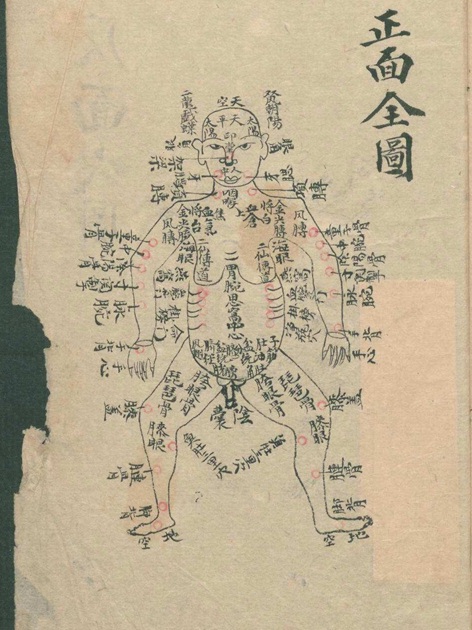
Image: “Zheng Mian Quan Tu 正面全圖,” Mi Chuan Die Da Bofang 秘傳跌打鈸方 Staatsbibliothek Zur Berlin, Collection MS8111.