Readers, Books, and the Making of Vernacular Knowledge in China
Lecture series at the University of Pennsylvania (in person and online), March 23 – 26, 2026.
Lecture Series by: Joan Judge
What did common readers read in the midst of the revolutions that punctuated China’s early twentieth century? How did they manage the challenges of the era — from new technologies to novel diseases, from institutional failure to commercial globalization? What did they know and how did they know it?
These questions animate this lecture series, which focuses on the relationship between physical books and historical common knowers. This is a challenging relationship to track. Common knowers are elusive; their acts of reading rarely documented. The books they used, the last vestiges of their reading and knowing processes, have been unevenly preserved and often dismissed as cultural detritus. In an age when digital technologies are both expanding the quantity of textual material available to us and skewing that archive toward what is most readily available and intellectually legible, the quest to find common knowers necessitates new methodologies. These methodologies begin with locating once widely consulted how-to books and thinking with them in innovative ways. They further entail developing digital tools that can help process these heterogenous materials and facilitate tracking — over global space and historical time — the repetitions, revisions, and transformations that signal the broader contours of common knowing.
These lectures are open to the public and can be attended both in-person and online.
Visit the website of the University of Pennsylvania Library for more information.
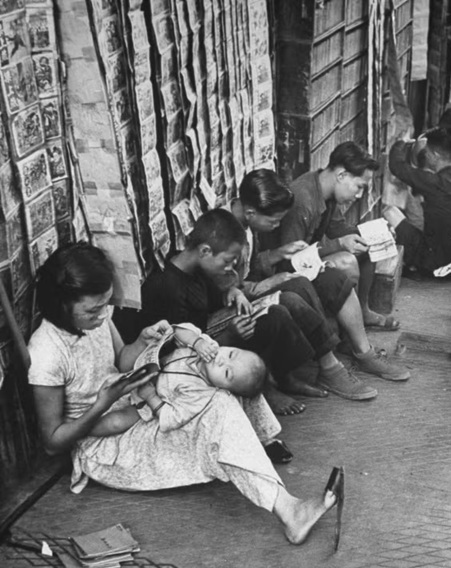
Featured image: Hong Kong street scene, 1940s. Carl Mydans/The LIFE Picture Collection/Shutterstock.