
“Beyond Classical Chinese Medicine”
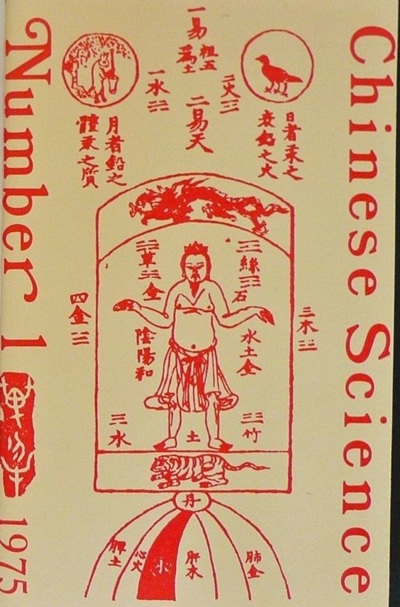
Special Issue in East Asian Science, Technology, and Medicine (EASTM).
Volume 57, Issue 2, published on 30 December 2025.
Includes articles by: Marta Hanson, Asaf Goldschmidt, Che-chia Chang
This fiftieth anniversary special issue of the journal East Asian Science, Technology, and Medicine (previously known as Chinese Science) pays tribute to the scholarly legacy of the late Professor Nathan Sivin (1931–2022), the founder and first editor-in-chief of the journal. The issue contains articles written by collaborators on the Vernacular Medicine and Modes of Knowing in China project.
The introduction of this issue, “Beyond Classical Chinese Medicine” by Asaf Goldschmidt and Marta Hanson, honors Professor Nathan Sivin’s legacy by covering the early history of the journal and summarizing his overall career and contributions to the history of science. They then revisit the argument in his 1987 work, Traditional Medicine in Contemporary China, which encourages historians to shift from the narrow lens of medicine to a more expansive framework of healthcare that involves a wider range of actors and practices. Finally, they introduce the four other articles published in this special issue and analyze how they build upon Professor Sivin’s intellectual contributions.
The article “Medical Practice in China During the Twelfth Century – Revisiting the Way and the Word Hypothesis,“ also written by Asaf Goldschmidt, examines debates among physicians in Song dynasty (960-1279) China and traces how they reached their diagnoses and implemented treatments within a complex social context. The article engages with the 2002 book The Way and The Word: Science and Medicine in Early Greece and China, co-written by Nathan Sivin and Geoffrey Lloyd, in which they argue that Chinese science and medicine primarily relied on cosmological doctrines, whereas those of ancient Greece relied more on debates between physicians. By using case records, case studies, and visual depictions, Goldschmidt shows that argument and debate began playing a central role in determining the pathology of the patient from the Song period onward, which he attributes to a greater shared “common knowledge” of medicine due to Song imperial patronage of medical texts.
The article by Che-chia Chang “Where is an Elephant’s Gallbladder? The Ideas of Animal Anatomy in Early Modern China,“ analyzes Chinese and Jesuit discussions of elephant anatomy by looking at Chinese, Manchu, and French sources. Chang shows that the Chinese carried out animal dissections as early as the eighteenth century and had substantial knowledge of animal anatomy. The article explores why Europeans often portrayed the Chinese as “anatomically backward” and reconstructs a Chinese perspective on dissection that differed from Western anatomical frameworks.
Additionally, Constance A. Cook’s “Matters of the Heart in Early Chinese Manuscripts” explores some of the earliest conceptions of the body by examining descriptions of the treatment of “heart pain” in bamboo texts from the second century BCE to the first century CE. These manuscripts reveal that ideas about the body were not as firmly established in this period as they were in the later transmitted medical canons of the Han dynasty (202 BCE–220 CE).
Chia-Yun Wu’s “Iu-Mien Yao’s Ritual Healing: A Case Study on Fertility Talismans as Depicting Birth Scenes in Religious Manuscripts (Early 19th- to Late 20th Centuries)” analyzes Iu-Mien Yao healing rituals by looking at a wide array of sources, ranging from manuscripts written by healers in the Yao ethnic group to Chinese Daoist sources. She shows how Iu-Mien Yao ritual masters were influenced by hybrid forms of knowledge, integrating both local practices as well as borrowing rites and patterns from external religions. By doing so, Wu carries out Professor Sivin’s call for scholars to study healthcare more broadly by examining the connections between religious and medical practices across different traditions.
Visit the website of East Asian Science, Technology, and Medicine (Brill) for more information.
Featured image: Cover of the first issue of Chinese Science (1975), courtesy of Marta Hanson.